
July 28, 2025 | Patient Stories
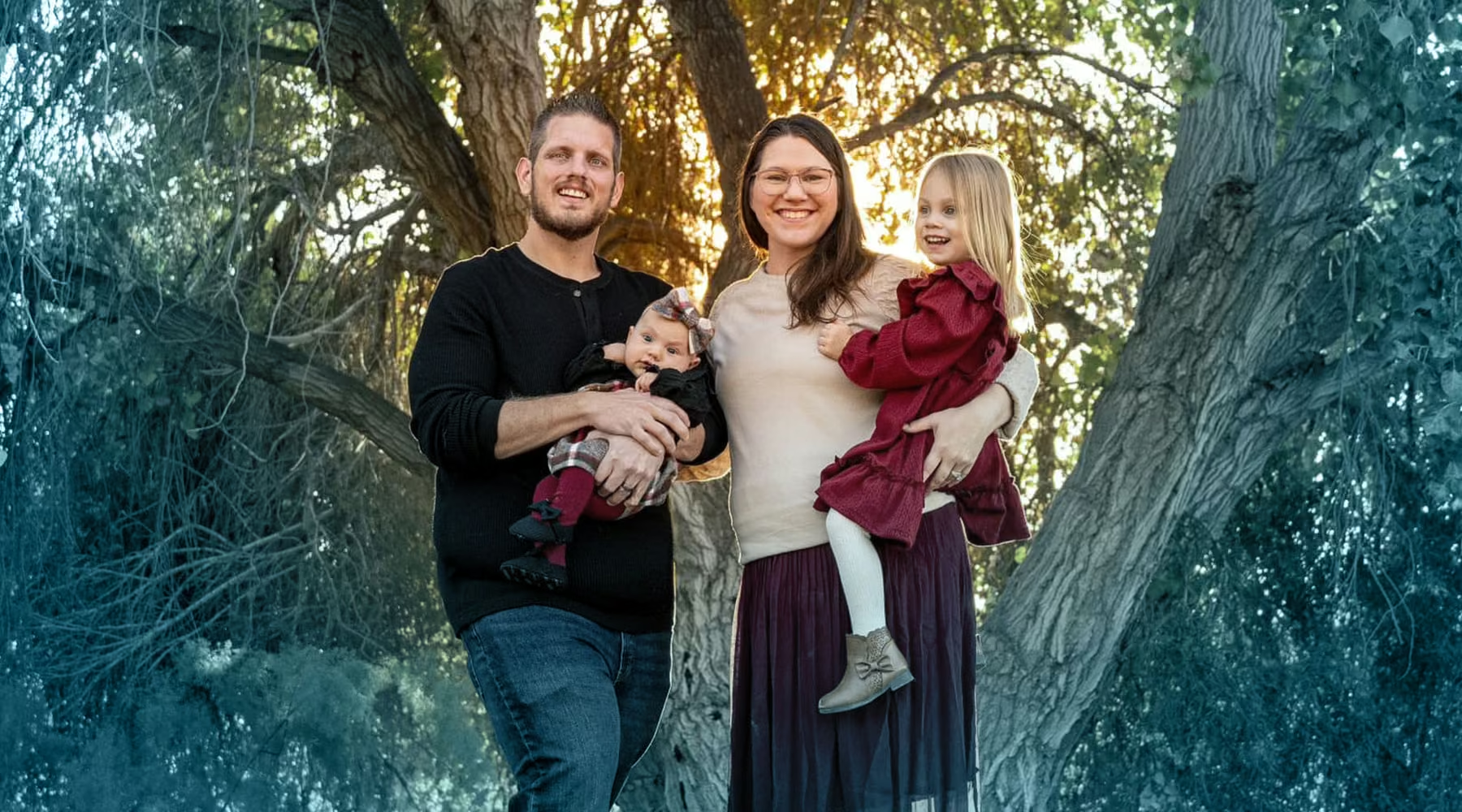
After years of battling his weight, Thomas reached nearly 500 pounds—until the birth of his daughter gave him a reason to change. Through duodenal switch surgery, determination, and daily discipline, he transformed his life. Today, he’s not just lighter—he’s present, active, and living the life he almost lost.
What motivated you to have weight loss surgery?
The birth of my first daughter was the turning point in my life and the greatest motivation behind my decision to lose the weight. Holding her for the first time, I realized just how much I wanted to be fully present for every part of her life — from her first steps to her graduation, and eventually, walking her down the aisle on her wedding day. I didn’t want to be the parent sitting on the sidelines, too tired or out of breath to play with her, chase her around the yard, or simply enjoy the moments that matter most. My goal wasn’t just about shedding pounds; it was about becoming the healthiest, most energetic version of myself so I could be the kind of father she deserves — active, involved, and always there. She gave me a new reason to fight for my health, and that purpose has kept me going every single day.
Your Story
I can still remember the exact moment I became aware of my weight for the first time. I was in the fourth grade, just a kid, sitting in class when it hit me — I was the heaviest kid there. That realization wasn’t just a fleeting thought; it was a weight that stayed with me, something I carried every day from that point on. I knew, even at that young age, that this was going to be a struggle that would follow me for the rest of my life.
From that moment forward, my weight became an obsession. It was constantly on my mind — every hour, every day. I knew I needed to lose it, and when I couldn’t reach my goals or would fall short, I’d spiral. And in those moments, I turned to the one thing that never judged me, never let me down: food. It became my comfort, my escape, and my coping mechanism all in one.
Throughout middle school and high school, I tried everything — crash diets, extreme restrictions, “quick fixes.” I was always on some kind of yo-yo diet, desperate for results. The one silver lining during that time was discovering weightlifting. It gave me purpose and a sense of control. Even though I was the biggest kid in the room, I found pride in being the strongest — or at least telling myself I was, just to feel better. It gave me confidence, even if it was just a mental shield.

Things really changed after my freshman year of college. I had stopped Olympic weightlifting, but I never adjusted my eating habits. I was still eating like I was training full-time — high calories, poor choices — but without the intense activity to balance it out. The weight started piling on, and before I knew it, I was caught in a cycle I couldn’t break.
That’s when things got serious. I’d lose a chunk of weight, feel good, and then slowly — or sometimes quickly — gain back not just what I lost, but even more. It was a vicious cycle, and it continued for years until I found myself at nearly 500 pounds. It was a wake-up call. I could no longer pretend this was something I could fix on my own. I needed help — real, professional help. And right around that same time, my wife and I found out we were expecting our first child.
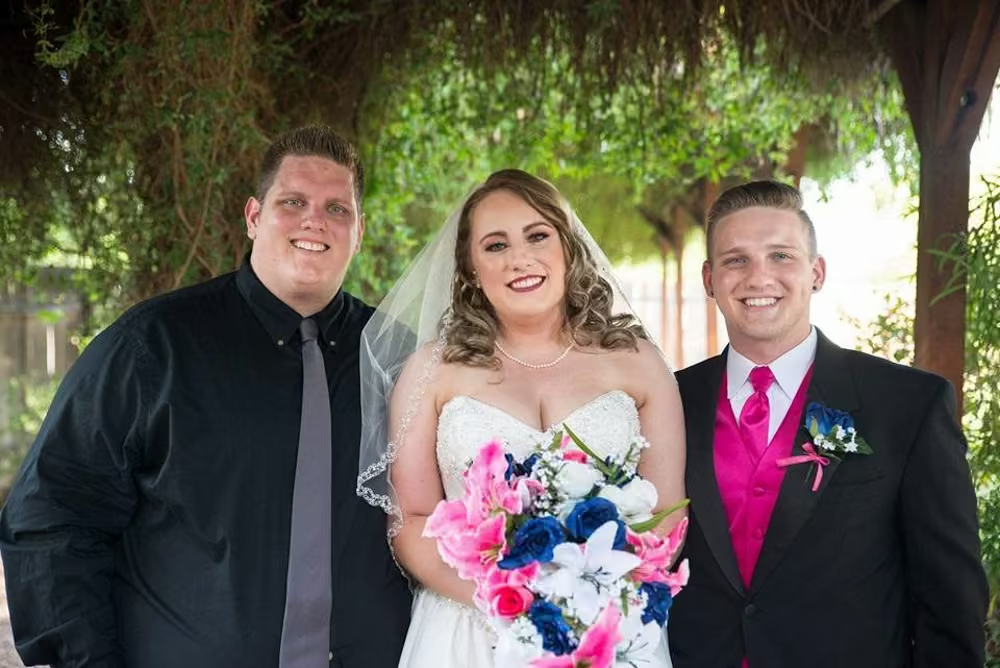
That moment changed everything. Knowing I was going to be a father gave me a new sense of urgency and purpose. I wasn’t just doing this for me anymore — I was doing it for her. I wanted to be there for her first steps, her school plays, her graduation, and one day, walk her down the aisle. I wanted to be the kind of father who was present, active, and healthy.
Still, asking for help was one of the hardest things I’ve ever done. There’s this voice in your head that says, “You got yourself into this, so you need to get yourself out.” It’s humbling to admit you need support — but it’s also one of the bravest, most life-changing things you can do. Looking back now, it was one of the best decisions I’ve ever made.
Before my first appointment with Dr. Brown, I made a promise to myself to get a head start. I began working hard to drop some weight, knowing that surgery alone wouldn’t fix everything. During the six months leading up to surgery, I pushed myself harder than ever, because I knew this tool had the potential to change the course of my life — if I was willing to put in the effort.
After surgery, everything shifted. I had to relearn how to eat, how to fuel my body, and how to treat food as something that serves me — not something that controls me. I had to accept that the weight wouldn’t magically fall off. The surgery wasn’t a cure — it was a tool. And once I truly understood that, everything changed.
I began building habits. At first, I focused on walking. A short walk turned into a two-mile walk, then three miles. Eventually, I added a weight vest to increase the challenge. After about a year, I started incorporating strength training again and increased my cardio. Slowly but surely, things began to click.
I won’t pretend I’m perfect — because I’m not. I’m human. There are days when I don’t hit my 100 grams of protein or my 100 ounces of water. There are days I miss the gym or make less-than-ideal food choices. But the key isn’t perfection — it’s consistency. If you keep showing up, even when it’s hard, even when you slip, you’ll make progress. It might not happen as fast as you want, but it will happen.
This journey has been anything but easy, but it’s been worth every step, every challenge, and every small victory along the way. And I’m still moving forward — not just for me, but for my family, and for the life I always dreamed of living.

What were your concerns prior to surgery?
Before undergoing surgery, I had a lot of fears and uncertainties swirling in my mind. One of the biggest concerns was the idea that I might never be able to enjoy my favorite foods again. Food had always played a central role in my life — not just for nourishment, but for comfort, celebration, and connection with others. The thought of having to give that up completely was honestly overwhelming. I worried that every meal would feel like a chore or a constant reminder of what I had lost.
Another major fear was that the surgery simply wouldn’t work — that I’d go through all the effort, make all the sacrifices, and still not see the results I hoped for. I was afraid it might end up being just another failed attempt, another disappointment, and a waste of time and energy. There was a lingering doubt in the back of my mind: “What if I go through all of this and nothing changes?”
Those concerns were very real for me, and they made the decision to move forward with surgery all the more difficult. But ultimately, I realized that the potential for a better, healthier future was worth facing those fears head-on.
What have you found challenging after surgery?
In the early stages after my surgery, one of the most challenging parts was figuring out which foods would trigger dumping syndrome. It felt like a constant guessing game — trying something new and hoping it wouldn’t lead to discomfort, nausea, or other unpleasant symptoms. At first, it was frustrating and discouraging not knowing how my body would react to certain meals. But over time, as I became more familiar with what my body could handle, that issue gradually faded away. Eventually, dumping syndrome stopped being a daily concern, and I learned how to navigate my new relationship with food more confidently.
Now, three years post-surgery, the biggest challenge I still face is portion control. It can be incredibly inconsistent — some days, I get full after just a few bites, while other times I feel like I can eat a lot and still not feel satisfied. That unpredictability makes it difficult to find a rhythm with meals, and sometimes it’s hard not to feel frustrated or confused by how my body responds. It’s an ongoing process of learning and adjustment, even years later. While surgery gave me an incredible tool, maintaining the results and managing daily life after it continues to take effort, mindfulness, and patience.
What are some of your off-scale wins since surgery?
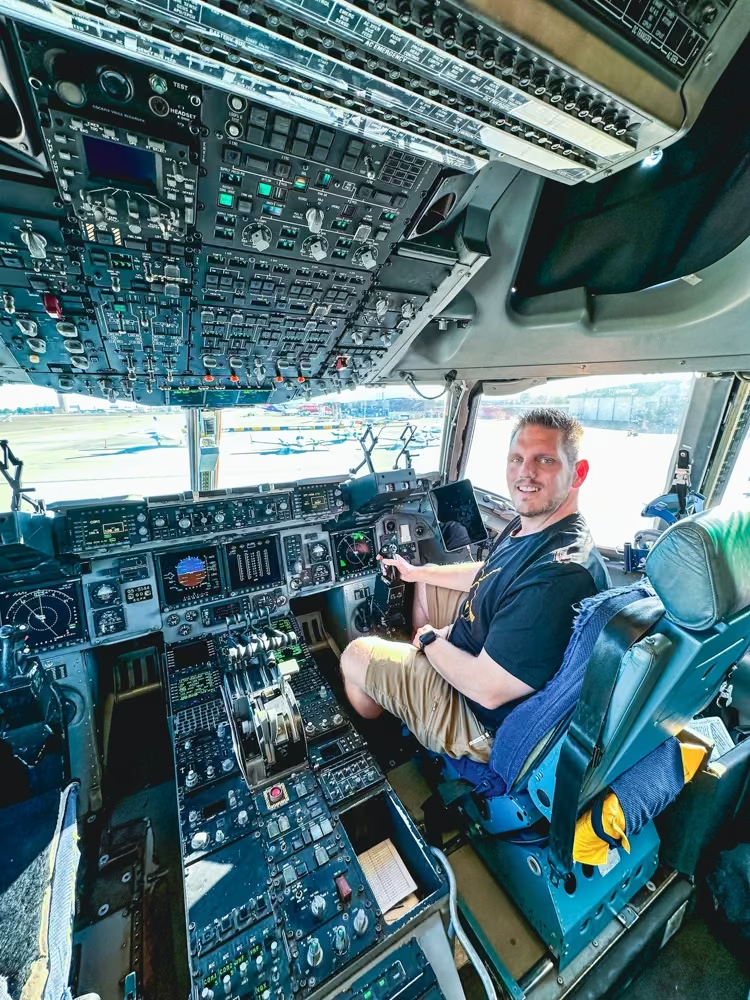
Some of the most meaningful victories I’ve experienced since my weight loss surgery haven’t been about the number on the scale — they’ve been the everyday moments that remind me how far I’ve come. One of the first things I noticed was being able to sit comfortably in an airplane seat — no seatbelt extender, no feeling cramped or anxious about fitting. For the first time in a long time, I could just sit back, relax, and enjoy the flight without worrying about my size.
Another huge milestone was being able to shop for clothes anywhere. I didn’t have to search for specialty stores or limit myself to certain sections. Being able to walk into almost any store and find something that fits — and looks good — was empowering. I even started getting gifts of clothing that were too big for me, which was a surreal but rewarding reminder of my progress.
One of the most heartwarming changes has been the ability to keep up with my kids. I can run around with them for hours — at the park, playing games, just being active and involved — without even thinking twice about it. I don’t have to pause to catch my breath or sit out while they play. I’m fully present now, and that’s a gift I don’t take for granted.
Even things I never expected have changed. I’ve had to buy slimmer shoes because I no longer need the extra width — something I never imagined would happen. And one of the more surprising (and sometimes funny) experiences is when people don’t recognize me anymore. Whether it’s friends I haven’t seen in a while or even acquaintances I’ve known for years, there’s this moment of shock on their faces, and it’s a reminder of how far I’ve come.
These off-scale wins are more than just perks — they’re life-changing reminders that my hard work, sacrifices, and commitment have truly paid off in ways that go far beyond what any scale could ever reflect.
DO You QUALIFY FOR WEIGHT LOSS SURGERY?
Find Out Now
Calculate How Much Weight You Could Lose
Find Out Now